
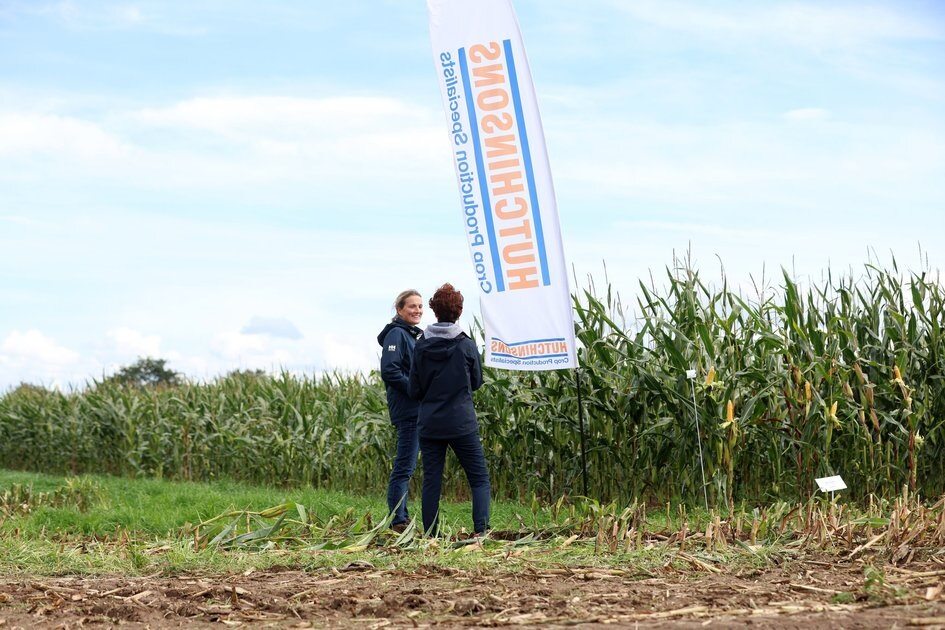
More attention needs to be given to maize nutrition planning, as some crops are potentially
being under–fed, thereby compromising yield, warns leading agronomy firm Hutchinsons.
Modern, high–yielding maize varieties can be very “hungry” for nutrients and trace elements
throughout the season, yet crop demands are sometimes not being met, Cumbria–based
agronomist, Jim Clark, and Hutchinsons crop nutrition manager, Tim Kerr suggest.
“I do believe that many growers are still under–feeding maize, and in dry years such as 2025,
it can be particularly challenging to ensure crops take up enough nutrition from the soil
alone,” says Mr Clark.
Indeed, leaf testing at the Hutchinsons Carlisle maize trials site in late August last season
showed issues with nitrogen, potash, and manganese, probably due to plants being unable
to extract sufficient nutrients from dry soils, he notes.
The risks of nutrient deficiency are often exacerbated in dry seasons, however issues can –
and do – still arise even when moisture is not limited, so nutritional programmes must be
planned carefully to meet crop demands in every situation, he says.
“Traditionally, where maize is grown on mixed or predominantly livestock farms, nutritional
demands are largely met with slurry or manure,” adds Mr Kerr. “However, depending on
individual situations, you might well need to supplement these requirements, particularly if
you’re growing maize in an arable situation.”
Applying late N by drone
One of the biggest challenges to feeding maize later in the season is the height of the crop
preventing the use of standard farm machinery. At the 2026 Carlisle maize trials, Mr Clark
plans to investigate whether a drone can be used to accurately apply late foliar nitrogen
fertiliser instead of a traditional wheeled spreader or sprayer. This follows successful trials
of drone–based undersowing of grass seed into standing maize during the 2025 trials.
being under–fed, thereby compromising yield, warns leading agronomy firm Hutchinsons.
Modern, high–yielding maize varieties can be very “hungry” for nutrients and trace elements
throughout the season, yet crop demands are sometimes not being met, Cumbria–based
agronomist, Jim Clark, and Hutchinsons crop nutrition manager, Tim Kerr suggest.
“I do believe that many growers are still under–feeding maize, and in dry years such as 2025,
it can be particularly challenging to ensure crops take up enough nutrition from the soil
alone,” says Mr Clark.
Indeed, leaf testing at the Hutchinsons Carlisle maize trials site in late August last season
showed issues with nitrogen, potash, and manganese, probably due to plants being unable
to extract sufficient nutrients from dry soils, he notes.
The risks of nutrient deficiency are often exacerbated in dry seasons, however issues can –
and do – still arise even when moisture is not limited, so nutritional programmes must be
planned carefully to meet crop demands in every situation, he says.
“Traditionally, where maize is grown on mixed or predominantly livestock farms, nutritional
demands are largely met with slurry or manure,” adds Mr Kerr. “However, depending on
individual situations, you might well need to supplement these requirements, particularly if
you’re growing maize in an arable situation.”
Applying late N by drone
One of the biggest challenges to feeding maize later in the season is the height of the crop
preventing the use of standard farm machinery. At the 2026 Carlisle maize trials, Mr Clark
plans to investigate whether a drone can be used to accurately apply late foliar nitrogen
fertiliser instead of a traditional wheeled spreader or sprayer. This follows successful trials
of drone–based undersowing of grass seed into standing maize during the 2025 trials.
Hutchinsons Press release 2
“It’s probably not something you’d do over large areas of maize, but it could be a useful
back–up plan should you miss the opportunity to apply nutrients due to the weather, wet
ground conditions, and/or rapid crop growth,” he notes.
“It’s probably not something you’d do over large areas of maize, but it could be a useful
back–up plan should you miss the opportunity to apply nutrients due to the weather, wet
ground conditions, and/or rapid crop growth,” he notes.
Related news:
https://precisemag.net/enhanced-capability-drones-launched/
